
Electronics & Communication Engineering
Introduction
The Department of Electronics and Communication Engineering (ECE) –SSIT was started in the year 1980, with an initial intake of 40 students. The department has enhanced the intake to 120 in the year 2007 and to 180 during 2024. The department also offers two PG programmes namely ‘Digital Electronics’ from the year 2005 and ‘VLSI and Embedded systems’ from the year 2009 . The undergraduate and post graduate programmes are approved by AICTE and presently the department is one among the 12 departments in the institute, which is affiliated to Sri Siddhartha Academy of Higher Education.
The department has been accredited 3 times. The department is supported by experienced and dedicated faculty who always strives for academic excellence. The department has well equipped laboratories and good staff members and library facility in the department.
Various motivational programmes like technical talk, industrial visit, webinar, workshops, conferences are organized in the department for the students and staff to actively involve in and get exposed to emerging technologies, thereby receiving a broader perspective on professional front by providing opportunity for team work, leadership and service.
About Department
The department has extensive tradition of eminence in educating, mentoring, and persuading technology leaders and researchers in the area of Electronics and Communication Engineering. The department is functioning with a vision of molding quality technocrats in the field of Electronics and Communication Engineering, which are framed in line with vision and mission of the college.
To achieve this, the curriculum is structured with an outcome based education and provides a strong foundation in both analytical and technological aspects of Electronics and Communication Engineering. Highly dedicated, committed and experienced faculty of the department , who are very passionate about teaching, continuously strive hard and leave no stone unturned for the all-round development of the students through personal guidance, mentoring and Counselling beyond academics. Faculty help our students to learn, develop, and lead lives of impact and supports students to work on projects, skill development apart from regular curriculum, encourage taking part in national / international design contest / tests / quiz, in order to make them competitive and industry ready.
During the course of their study, our students are encouraged to take up mini projects, do internships and case studies to supplement theoretical knowledge with practical experience. Students are also been encouraged and guided to publish papers in National/International Conferences and journals. They are motivated to select the projects benefiting the society and human kind. Some of our student projects are also been appreciated and funded by KSCST.
The department proudly hosts the “Parishrama Activity Club”, dedicated to enriching student experiences through various activities like value added courses, workshops, Internship Trainings, hobby projects and other skill building activities.
Our students actively involve, organize, and participate in activities of various clubs and professional bodies like IEEE, ISTE, NSS, NCC, Varsity circle. These forums aid the students to take up innovative projects, present technical papers and various technical and nontechnical events and exhibit their talents and skills. Department constantly supports our students to represent our college and have bagged several prizes in various technical and nontechnical events conducted at national level by colleges/universities.
Under TEQIP, several FDPs, workshops, seminars has been organized and several faculty has also been deputed to attend international conferences and workshops.
The department is also equipped with ‘Department Library’ apart from the main library to cater Educational needs, Information needs, Inspiration needs and recreational needs of students and faculty. It is enriched with more than 600 Volumes of textbooks, Project thesis (B.Tech, M.Tech) of past academic years, Old question papers, Competitive Exam Books like GRE, GATE, Civil Services, Aptitude, and Reasoning.
The alumni of the department have strong global presence making their alma mater proud in every sector they present. Good number of alumnae have pursued/ pursuing research programmes (M. Tech/Ph.D) is a true research potential of the Department.
We strongly believe in ‘Our Students are our Brand Ambassadors’.

Dr. M C Chandrashekhar
Professor & Head
Vision of the Department
Mould quality technocrats in the field of Electronics and Communication with human values to cater the societal needs.
Mission of the Department
- To impart high-quality academic environment.
- To provide training in new tools and technologies.
- To facilitate continuous learning and research environment.
- To inculcate professionalism with ethical values, with little impact on environment.
Program Educational Objectives (PEOs)
- PEO-1: Proficient to apply the knowledge gained in mathematics, science and engineering to the field of electronics and communication engineering for the synthesis and analysis of systems
- PEO-2: Competent to pursue higher studies and research, with effective communication
- PEO-3: Aware of new technologies in the domain field, apply the same for the societal requirement minimizing the impact on environment and ethical practices in their domain
Program Outcomes (POs)
Engineering Graduates will be able to:
- PO 1: Engineering Knowledge: Apply knowledge of mathematics, natural science, computing, engineering fundamentals and an engineering specialization as specified in WK1 to WK4 respectively to develop solutions for complex engineering problems.
- PO 2: Problem Analysis: Identify, formulate, review research literature and analyze complex engineering problems reaching substantiated conclusions with consideration for sustainable development. (WK1 to WK4)
- PO 3: Design/Development of Solutions: Design creative solutions for complex engineering problems and design/develop systems, components, or processes to meet identified needs with consideration for public health and safety, whole-life cost, net zero carbon, culture, society and environment as required. (WK5)
- PO 4: Conduct Investigations of Complex Problems: Conduct investigations of complex engineering problems using research-based knowledge including design of experiments, modelling, analysis and interpretation of data to provide valid conclusions. (WK8)
- PO 5: Engineering Tool Usage: Create, select and apply appropriate techniques, resources and modern engineering and IT tools, including prediction and modelling, recognizing their limitations to solve complex engineering problems. (WK2 and WK6)
- PO 6: The Engineer and The World: Analyze and evaluate societal and environmental aspects while solving complex engineering problems for their impact on sustainability with reference to economy, health, safety, legal framework, culture and environment. (WK1, WK5 and WK7)
- PO 7: Ethics: Apply ethical principles and commit to professional ethics, human values, diversity and inclusion; adhere to national and international laws. (WK9)
- PO 8: Individual and Collaborative Team Work: Function effectively as an individual, and as a member or leader in diverse and multidisciplinary teams.
- PO 9: Communication: Communicate effectively and inclusively within the engineering community and society at large, such as being able to comprehend and write effective reports and design documentation, and make effective presentations considering cultural, language and learning differences.
- PO 10: Project Management and Finance: Apply knowledge and understanding of engineering management principles and economic decision-making, and apply these to one’s own work, as a member and leader in a team, and to manage projects in multidisciplinary environments.
- PO 11: Life-Long Learning: Recognize the need for, and have the preparation and ability for (i) independent and life-long learning, (ii) adaptability to new and emerging technologies, and (iii) critical thinking in the broadest context of technological change. (WK8)
Knowledge and Attitude Profile (Washington Accord Knowledge)
- WK 1: A systematic, theory-based understanding of the natural sciences applicable to the discipline and awareness of relevant social sciences.
- WK 2: Conceptually-based mathematics, numerical analysis, data analysis, statistics and formal aspects of computer and information science to support detailed analysis and modelling applicable to the discipline.
- WK 3: A systematic, theory-based formulation of engineering fundamentals required in the engineering discipline.
- WK 4: Engineering specialist knowledge that provides theoretical frameworks and bodies of knowledge for the accepted practice areas in the engineering discipline; much is at the forefront of the discipline.
- WK 5: Knowledge, including efficient resource use, environmental impacts, whole-life cost, reuse of resources, net zero carbon, and similar concepts, that supports engineering design and operations in a practice area.
- WK 6: Knowledge of engineering practice (technology) in the practice areas in the engineering discipline.
- WK 7: Knowledge of the role of engineering in society and identified issues in engineering practice in the discipline, such as the professional responsibility of an engineer to public safety and sustainable development.
- WK 8: Engagement with selected knowledge in the current research literature of the discipline, awareness of the power of critical thinking and creative approaches to evaluate emerging issues.
- WK 9: Ethics, inclusive behavior and conduct. Knowledge of professional ethics, responsibilities, and norms of engineering practice. Awareness of the need for diversity by reason of ethnicity, gender, age, physical ability etc., with mutual understanding and respect, and of inclusive attitudes.
Program Specific Outcomes (PSOs)
- PSO 1: The ability to identify, analyse and design systems related to modern engineering hardware and software tools, in Electronics and Communication Engineering in the areas of electronics, communication, image processing, VLSI, signal processing and embedded systems for solving day to day problems.
- PSO 2: Impart the awareness about the impact of professional engineering solutions in societal and environmental context, professional ethics and be able to communicate effectively.

Dr. M.C. Chandrashekhar
Professor and Head, ECE Department, Convener- Curriculum Development Cell (CDC), Counsellor- IEEE student branch , SSITExperience: 29

Dr. Suresh M
ProfessorExperience: 31

Dr. Divyaprabha
ProfessorExperience: 28

Dr. Sunil T D
ProfessorExperience: 21

Dr. Anitha Devi M.D
ProfessorExperience: 19

Dr. Chidananda Murthy M V
ProfessorExperience: 16

M C Basavaraja
Associate ProfessorExperience: 21

Dr. Sreerangappa.M
Assosciate ProfessorExperience: 18

Dr. Shyla.M.K
Associate ProfessorExperience: 15

Dr. Komala K
Associate ProfessorExperience: 19

Dr. Ashwini S Shivannavar
Associate ProfessorExperience: 19

Dr. Praveen Kumar Y G
Associate ProfessorExperience: 15

Dr. Sharada Guptha M N
Associate ProfessorExperience: 17

Dr. Keshava Murthy T G
Associate ProfessorExperience: 13

C R Mohan Kumar
Assistant ProfessorExperience: 14

Ravisimha B N
Assistant ProfessorExperience: 13

PRAVEEN M
Assistant ProfessorExperience: 10

Bindu A U
Assistant ProfessorExperience: 11

Dr. Ghouse Ahamed Z
Assistant ProfessorExperience: 15 Years

M R Maanasa
Assistant ProfessorExperience: 6 Years

Revanna B R
Assistant ProfessorExperience: 03 Years

SRIRAMU D S
Assistant ProfessorExperience: 11 Years

Sriraksha Devaraj
Assistant ProfessorExperience: 2 years

Vidya K V
Assistant ProfessorExperience: 4 years

Nicy Siby
Assistant ProfessorExperience: 1 year

Hamsalekha N P
Assistant ProfessorExperience : 10 years
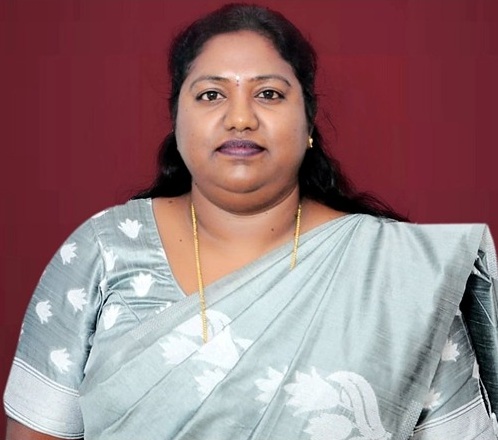
Divyarani S.K
Assistant ProfessorExperience : 6 Years
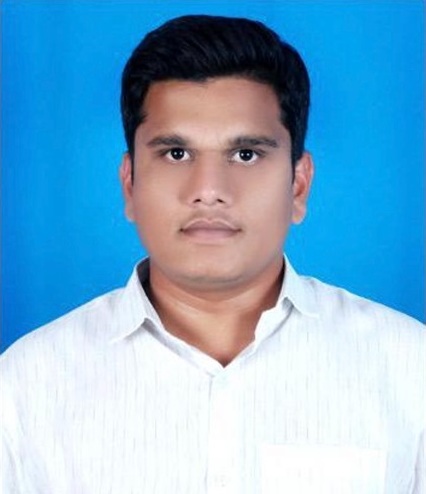
SIMHA D K L N
Assistant ProfessorExperience : 5.5 Years

Bharath Kumar T S
Visiting FacultyExperience : 30 years

Mahalingesh T C
Visiting FacultyExperience : 30 Years
Click Here
| MOUs Signed |
| Activities |
| Newsletter and Magazine |
Top Notch Alumnus

Dr. Mahadeva Prasanna
Dean
Professor, Department of EE
IIT
Dharwad
prasanna@iitg.ernet.in

Sumana Iyengar
Co-founder and CEO
Goavega software Inc.
Southlake-USA and
Bengaluru
contact@goavega.com

Dr. R K Das
Principal
DRIEMS, Tangi
Cuttak
drrkd67@gmail.com

Hemanth Kumar
Founder, Director – Product Development
V3Novus Pvt
Ltd
Bangalore
hemanth.r@v3novus.com

Dr. Kariyappa B S
Professor
Department of ECE
RVCE,
Bangalore
kariyappabs@rvce.edu.in

Chethan Prasad
Founder and director
ALTILOGIC Technologies
Bangalore
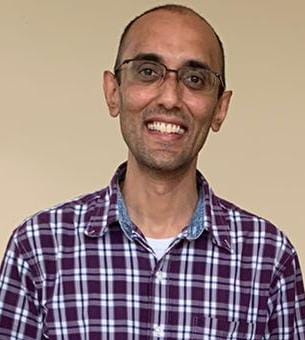
Ram Kumar
Senior Director
Qualcomm
Bangalore
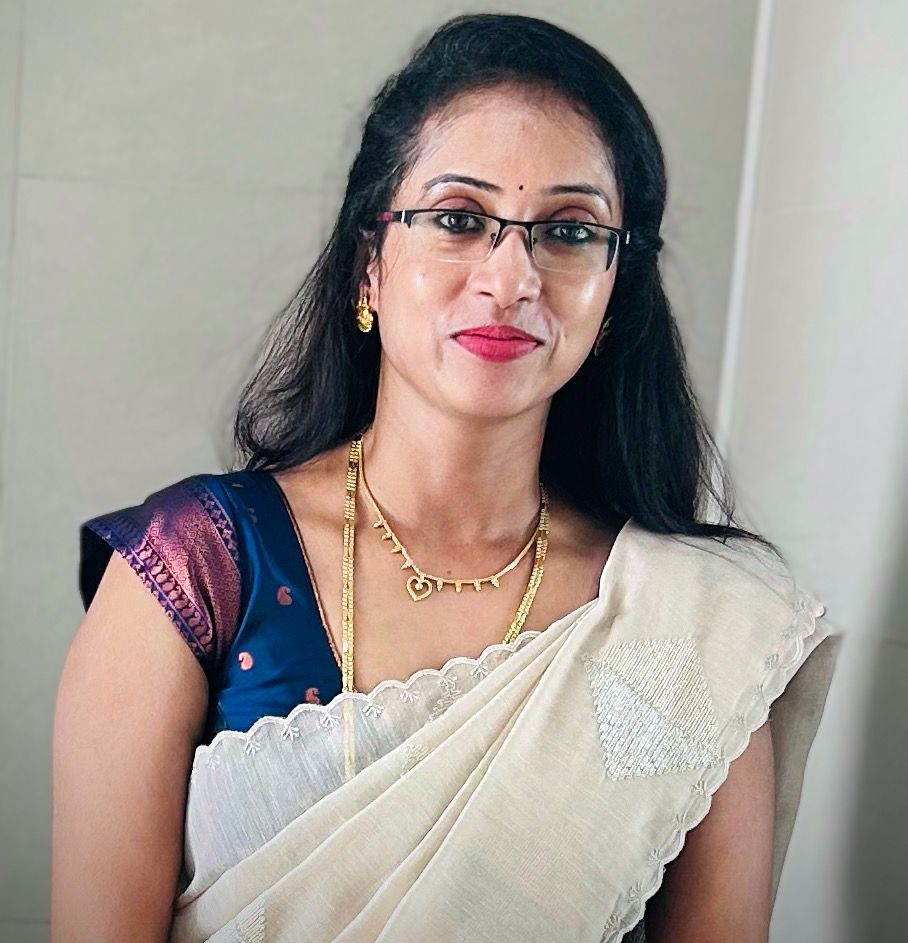
Lakshmi Devi P
Senior Associate
JP Morgan Chase

Dr. Mithileysh
Sathyanarayanan
Founder , CEO , Scientist
MIT
SQUARE
London
s.mithilyesh@gmail.com

Keshav Murthy
Manager
Symphony AI
Bangalore
keshav05@gmail.com

Krishna Kanth C M
Software Engineer,
Mast Global Business Services India
Ltd,
Bangalore.
cmkrishnakant@gmail.com

Vinay koneri
Senior Member of Technical Staff
IC Design – ABU
Chandler, AZ
85225, USA
Vinay.Koneri@maximintegrated.com

Guru Prasad B T
Advanced software engineer
Aptiv Tech
Centre
Bangalore
guruprasadigbt@gmail.com

Naveen Kumar C J
Consultant
BMC software
Bangalore

Abhishek Mukherjee
Manager, Consumer Insights and Analytics
Sobeys ,
Waterloo
Canada
abhishekatdesk7@gmail.com

Shreyas A
Associate Engineer
Thales
Bangalore
shreyas.ec.hsd@gmail.com

Raviteja
Solution Architect
Ericsson global India Pvt.
Ltd
Banagalore
ravitejcool.78@gmail.com

Keerthana. S
Technical support specialist
Moving image EVP
Berlin,
Germany.
skeerthana27@gmail.com

Shivanappa Mantur
Senior andrioid Develeoper
Tech vibrant Innovative Solutions Pvt.
Ltd,
JP Nagar, Bangalore
shivumantur43@gmail.com

Naveen Bharadwaj H M
Associate Software Engineer
Undocked
Technologies
Bangalore
naveenbharadwaj1998@gmail.com

Stephen Rao Nagarappu
Senior java Developer
Hexacorp LLC
North Carolina,
USA
raostephen.sp@gmail.com

Sivakanth Neelappanavara
Senior Software Engineer
Cast & Crew Entertainment
services
Losangles, Califonia
sivakanth.n.1989@gmail.com

Guruprasad K Naik
Deputy range Forest officer
Karnataka Forest Department
Uttara
kannada District
gsk1prasad@gmail.com

Priyanka K
System Engineer
TCS
Bangalore
k.priyankareddy48@gmail.com

Rajeshwari B M
Systems Engineer,
TATA Consultancy Services
Basavana Bagewadi,
Vijayapura
bmr.hadapad@gmail.com

Vishalakshi M N
Technical Lead
NXP India Pvt.
Ltd
Bangalore
vishala2006@gmail.com

Gowtham H R
Senior consultant,
Delloite,
Mexico
gowtham.031@gmail.com

Veena M P
Instructional designer
Cogbooks India Pvt
Ltd
Bnagalore
veenarangaiah@gmail.com

Rahul Anand Nayanegali
Software Engineer,
CodeCraft Technologies Pvt
Ltd
Bangalore
rahulnayanegali@gmail.com

Tabjula Akhil
SOC Analyst
Wipro Technologies
Ltd
Anantapur
akhil.tabjula7@gmail.com

Vachan U Bharadwaj
Senior RTL CAD Engineer
Xilinx (AMD)
San Jose
CA
vachanukb@gmail.com

Avinash Kumar Dubey
Senior Technical Lead
Collins Aerospace
Howrah-711202 West
Bengal
avinashd91@gmail.com

Rajat Kumar
NI Academic Program Manager
VVDN Technologies Pvt Ltd.
Bangalore.
Achievements
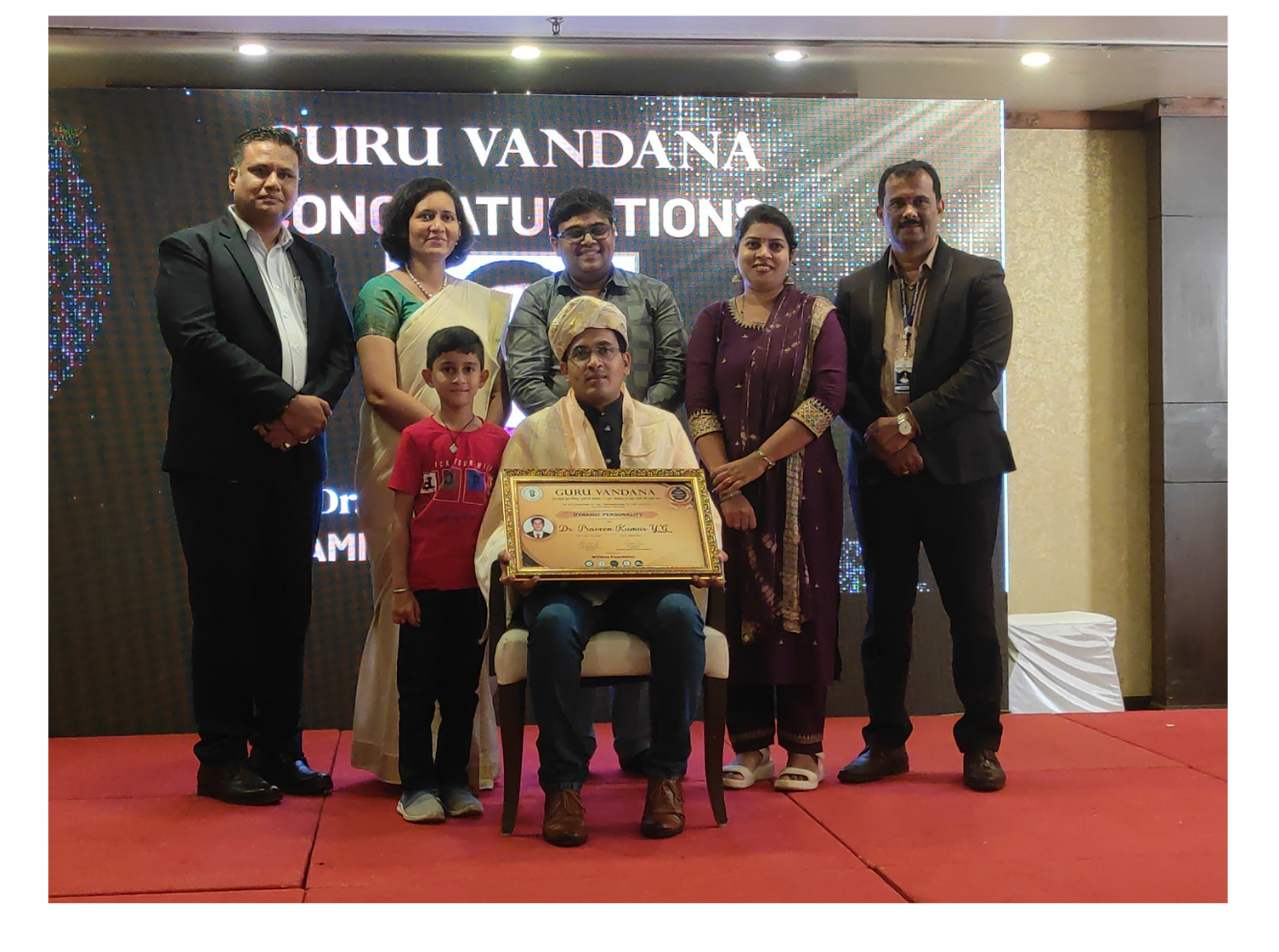


Funded Project (VGST)
The project titled “Cyber Security Center of Excellence Lab” is selected for the Grant of Rupees 20,00,000/- from Vision Group of Science and Technology (VGST), Government of Karnataka for the academic year 2020-2021. Co-Investigator: Prof. Komala K
Best Volunteer award

Student Name – Aishwarya SM
Date – 10th January 2021
Outstanding Student Branch Website
Active Volunteers of SSIT IEEE Student branch have won “Outstanding Student Branch Website” Award for designing and maintaing the sepaerate website for IEEE-WIE student branch from the IEEE Bangalore Section for the year 2020-21. Award was presented to the students in Annual General Body Meeting of IEEE Bangalore Section.
Event name – Annual General Body Meeting of IEEE Bangalore
S
Student Name – Niranjan N, Darshini M , Vishwas N,
Aishwarya S M
Date – 10th January 2021

Outstanding/Best project Recoginzed by KSCST in the year 2020-21

Project Proposal titled ” An Automated Door Opening System to Reduce COVID-19 Risk using facial mask, Body Temperature and Social Distancing Detection” given by the final year UG students Rakesh S Revankar, Vishwas N , Rohini M J , Shivakumar K S of ECE department has been selected for KSCST Sponsorship. The team was guided by Mrs. Sharada Guptha M N, Assitant professor , ECE Department. The team has won 5000 Rs cash award from the KSCST.
Student Name – Rakesh S Revankar, Vishwas N , Rohini M J ,
Shivakumar K S
Date – 1st April 2021
Outstanding/Best project Recoginzed by KSCST in the year 2019-20
Date – 27th July 2019

Outstanding/Best project Recoginzed by KSCST in the year 2019-20

Date – 27th July 2019
Best Project Award
Best paper Award
Best paper Award
Best Poster Presentation

Author for the TEXT BOOK

Funded Project

- “Fabrication and Characterization of High Performance Flexible Carbon Nano tube Thin-FIlm Transistors.”
- “Fabrication and Characterization of Carbon Nanotube Based Thin-film Transistors and Digital Circuits on Kapton ( polyimide ) Substrate”
Sponsored by: Indian Nano Users Programme and initiated by DIT, MCIT, Govt.of India
Carried out at: CEN, IIT Bombay
Best Paper Award

Best Project

Best Project
College ambassador/ Appreciation

Downloads
Board of Studies – Academic year 2025-26
| SI No. | Name and address | Role |
|
01 |
Dr. M.C. Chandrashekhar |
Chairman |
|
02 |
Dr. M.D. Anithadevi |
Convener |
|
03 |
Dr. M. Suresh |
Member |
|
04 |
Mrs. Divya Prabha |
Member |
|
05 |
Dr. Sreerangappa M |
Member |
|
06 |
Dr. T.D. Sunil |
Member |
|
07 |
Dr. M.V. Chidanandamurthy |
Member |
|
08 |
Dr. Shyla M K |
Member |
|
09 |
Dr. Komala K |
Member |
|
10 |
Dr. Ashwini S Shivannanavar |
Member |
|
11 |
Dr. Sharada Guptha M N |
Member |
|
12 |
Bindu A U |
Member |
|
External Members |
||
|
01 |
Dr. K.V. Suresh |
Member |
|
02 |
Dr. K C NarasimhaMurthy |
Member |
|
03 |
Sunil T Shambhatnavar, General Manager, TMI Systems, Bengaluru |
Member |
|
04 |
Dr. Dayananda Kumar N C, Project Manager. Artificial Intelligence Team, Samsung Electro Mechanics, India Ltd., Bengaluru |
Member |
|
Student Members |
||
|
01 |
Anudeep R – 21EC011, 8th sem, ECE Dept, SSIT- Tumakuru |
Member |
|
02 |
Namratha S – 21EC124, 8th sem, ECE Dept, SSIT- Tumakuru |
Member |
Econtent coming soon
INFRASTRUCTURE
The ECE department has eight well-equipped laboratories designed to provide students with hands-on experience and practical application of theoretical knowledge. These labs support experiments, projects, and research activities across various specializations.
EC LAB 1
- Innovation and Skill Development Lab
- Digital Electronics Lab
- Analog Communication Lab
Innovation and Skill Development Lab: Focuses on project-based learning and interdisciplinary research. Facilities include 3D printers, soldering stations, Arduino, Raspberry Pi, microcontrollers, CAD tools, and data analysis platforms such as MATLAB.
Digital Electronics Lab: Equipped for the design and testing of digital circuits using Digital IC Trainer Kits, DSOs, logic probes, function generators, and computers with VHDL/Verilog, Multisim, and Xilinx ISE software.
Analog Communication Lab: Supports analysis of analog modulation techniques. Equipment includes RF signal generators, CROs/DSOs, spectrum analyzers, multimeters, and electronic components for circuit prototyping.
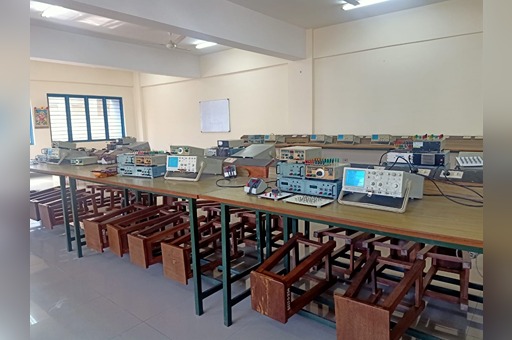
EC LAB 2
- Analog Electronics Circuits Lab
- Advanced Communication Lab
Analog Electronics Circuits Lab: Provides hands-on experience in designing and testing basic analog electronic circuits.
Advanced Communication Lab: Supports higher-level experiments in fiber optics, wireless communication, and microwave systems. Facilities include klystron benches, modulation kits, microwave components, oscilloscopes, power supplies, and multimeters.
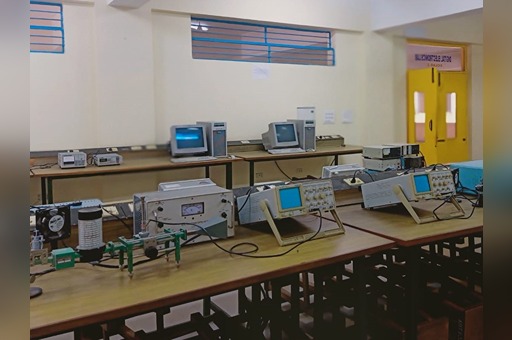
EC LAB 3
- Basic Electronics Lab
A foundational lab equipped with oscilloscopes, power supplies, function and audio generators, rectifier kits, firing circuit kits, multimeters, and ammeters to bridge theory and practice.
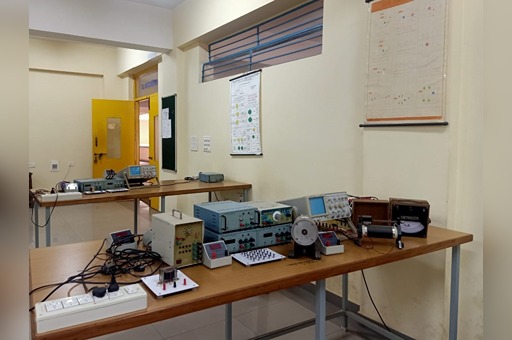
EC LAB 4
- EC Skill Lab – I
- Microcontroller Lab
- VLSI Design and Advanced Embedded Systems Lab (PG)
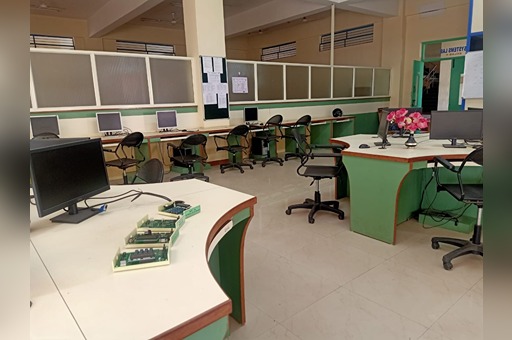
The Microcontroller Lab includes PCs with IDE software such as Keil and MPLAB, trainer boards (8051, PIC, ARM), and interface kits for embedded system development.
The VLSI and Advanced Embedded Systems Lab provides FPGA kits, DSP kits, ARM boards, Microwind software, and simulation tools for IC and system design.
EC LAB 5
- EC Skill Lab – III
- Wireless Communication Lab
- Computer Communication Network Lab
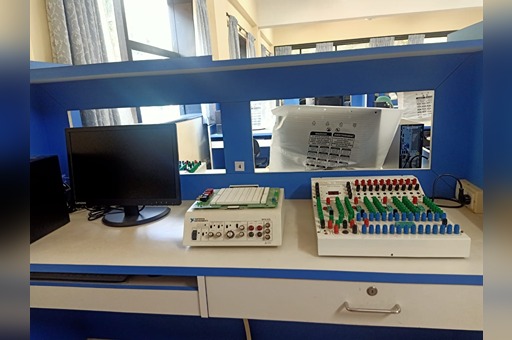
The Wireless Communication Lab supports RF signal generation, analysis, and over-the-air communication experiments using spectrum analyzers and RF generators.
The Computer Communication Network Lab enables design and troubleshooting of network topologies using routers, switches, servers, and networking cables.
EC LAB 6
- Digital Signal Processing Lab
- IoT Lab
- Digital System Design and Advanced Embedded Systems Lab (PG)
- EC Skill Lab – II
- HDL Lab
- Image Processing Lab
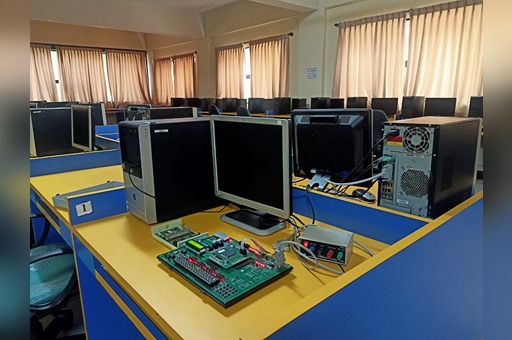
These labs focus on signal processing, embedded systems, HDL-based design, IoT applications, and image processing using FPGA boards, DSP kits, MATLAB, OpenCV, Xilinx, Cadence, and high-performance computing systems.
EC LAB 7
- Project / Research Lab
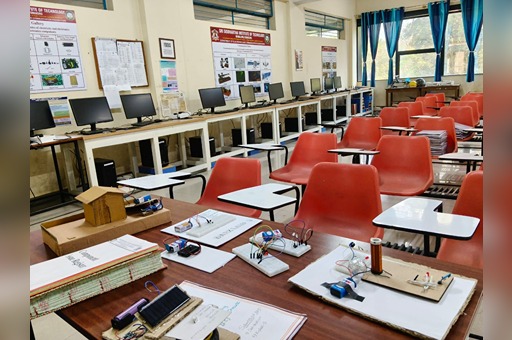
This lab supports advanced student projects and research activities with facilities including FPGA kits, DSP kits, microcontroller boards, IoT modules, motors, sensors, communication modules, CAD tools, and simulation software.
EC LAB 8
- VLSI Lab
The VLSI Lab is equipped with high-performance workstations running Cadence EDA tools for IC design, simulation, and verification. Hardware includes FPGA boards, DSP boards, oscilloscopes, multimeters, and function generators.
